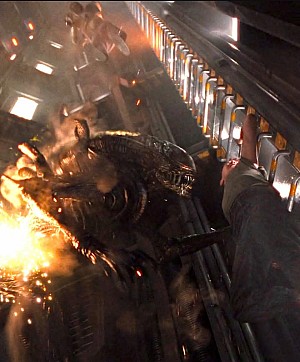
The Alien franchise is one of science fiction’s most iconic and enduring horror sagas. Blending cosmic terror, corporate dystopia, and biological horror, the series explores humanity’s encounter with a deadly extraterrestrial species known as the Xenomorph. Since its debut in 1979, Alien has expanded into a vast universe of films, games, comics, and lore — all centered around one terrifying question: what happens when humanity reaches too far into the unknown?
This guide serves as an introduction to the core elements of the Alien universe — its timeline, themes, major players, and the creatures that define it — giving new fans everything they need to understand the franchise before diving deeper.
The Core Premise
At its heart, the Alien franchise is about survival against an unstoppable organism. The Xenomorph is not just a monster — it is a highly evolved parasitic lifeform designed to spread rapidly and lethally. Human encounters with the species are almost always catastrophic, often worsened by the involvement of powerful corporations willing to sacrifice lives to weaponize the creature.

Unlike many science fiction stories, Alien leans heavily into horror, emphasizing isolation, vulnerability, and the unknown. Space is not portrayed as a frontier of hope, but as a cold, indifferent void where something ancient and deadly already exists.
The Timeline at a Glance
The Alien timeline spans multiple centuries, beginning with humanity’s earliest deep-space explorations and stretching into far-future cloning experiments. While the franchise includes prequels and spin-offs, the core narrative can be understood through a handful of key eras.
The Prequel Era
Films like Prometheus (2093) and Alien: Covenant (2104) explore humanity’s search for its creators — an ancient species known as the Engineers. These stories introduce the origins of the Xenomorph and the role of synthetic androids like David, whose experiments blur the line between creator and destroyer.
The Nostromo Incident
The original Alien (2122) follows the crew of the commercial towing vessel Nostromo, who encounter a derelict alien ship on LV-426. What begins as a routine investigation turns into a nightmare when a Xenomorph infiltrates the ship. This film introduces Ellen Ripley, one of science fiction’s most iconic survivors.
The Colonial Marines Era
Aliens (2179) shifts from horror to action as Ripley returns to LV-426 with a squad of Colonial Marines. The discovery of a Xenomorph hive and a powerful Queen expands the creature’s mythology and reveals its hive-based social structure.

The Fall of Ripley
Alien 3 (2179) and Alien: Resurrection (2381) continue Ripley’s story, exploring themes of sacrifice, identity, and humanity’s obsession with controlling the uncontrollable. These later entries delve into cloning, hybridization, and the moral consequences of scientific overreach.
The Xenomorph Explained
The Xenomorph is the central threat of the franchise — a biomechanical organism with a life cycle unlike anything on Earth. Its reproduction relies on parasitism, beginning with a Facehugger implanting an embryo into a host, which later emerges as a Chestburster before maturing into its deadly adult form.
Highly adaptable, Xenomorphs can take on traits of their hosts, making each encounter unpredictable. Their acid blood, stealth, and relentless instincts make them nearly impossible to contain once an outbreak begins.
The Role of Weyland-Yutani
No discussion of Alien lore is complete without Weyland-Yutani, the powerful megacorporation that appears throughout the series. Often referred to simply as “The Company,” Weyland-Yutani prioritizes profit and technological advancement above human life.

Time and again, the company seeks to acquire Xenomorph specimens for use as biological weapons, disregarding the catastrophic risks involved. Their actions serve as a recurring reminder that humanity’s greatest threat may not be the alien — but itself.
Synthetics and Artificial Life
Artificial humans, known as synthetics, play a major role in the Alien universe. Characters like Ash, Bishop, and David each represent different aspects of artificial intelligence — from cold corporate tools to deeply philosophical beings.

These androids often act as intermediaries between humanity and the unknown, raising questions about identity, free will, and what it truly means to be alive.
Key Themes of the Franchise
The Alien series is more than just a monster story. It explores complex themes that give the franchise its lasting impact.
Fear of the Unknown: Humanity ventures into space only to discover something far older and more dangerous than itself.
Corporate Greed: Weyland-Yutani’s pursuit of profit often leads to disaster, highlighting the dangers of unchecked capitalism.
Creation and Control: From the Engineers to androids like David, the series repeatedly questions who has the right to create life — and whether that life can ever be controlled.
Survival: At its core, Alien is about endurance in the face of overwhelming odds, embodied by characters like Ripley who refuse to give up.
Where to Start
For newcomers, the best entry point is the original Alien (1979), followed by Aliens (1986). From there, viewers can explore the prequels for deeper lore or continue the main timeline to see how the story evolves.

Whether approached as a horror series, a science fiction epic, or a philosophical exploration of creation and survival, the Alien franchise offers one of the richest and most terrifying universes in modern storytelling.
Expanding the Universe
Beyond the films, the Alien universe continues to grow through TV series, video games, novels, comics, and other upcoming projects. Stories like Alien Earth, Alien: Isolation and Fireteam Elite expand the timeline and offer new perspectives on humanity’s struggle against the Xenomorph threat.
As new entries are released, the lore continues to evolve — ensuring that the nightmare first discovered aboard the Nostromo is far from over.
Published 23h ago • Last Updated: 23h ago