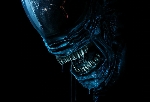
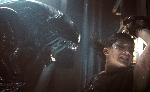
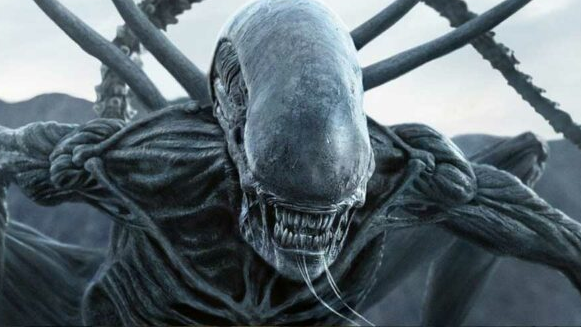
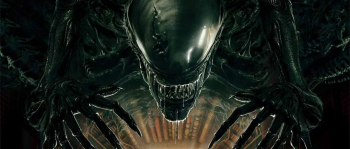
The Alien Queen is one of the most iconic and terrifying figures in science fiction. As the primary reproductive force behind the Xenomorph species, the Queen represents both the intelligence and the unstoppable expansion of the hive. Larger, stronger, and more cunning than standard drones, each Queen serves as the heart of her colony — laying eggs, commanding her offspring, and ensuring the survival of her species at any cost.
Across the Alien franchise and its extended universe, multiple Queens have appeared — each with unique traits, environments, and roles in shaping the lore. This guide explores the most notable Alien Queens from the films, spin-offs, and crossover entries.
The LV-426 Queen (Aliens, 2179)

The most famous Queen in the franchise appears in Aliens, where she rules over a massive hive within the terraforming colony on LV-426. Towering over her drones, this Queen demonstrates clear intelligence, strategic thinking, and maternal aggression.
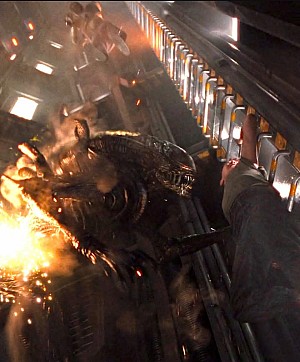
She commands the hive with precision, directing her warriors to defend the nest and retaliate against threats. Her confrontation with Ellen Ripley — particularly the climactic battle involving the power loader — remains one of the most iconic moments in cinematic history.
This Queen establishes the species’ hive structure, confirming that Xenomorphs operate as a coordinated, eusocial organism rather than as solitary predators.
The Fiorina 161 Queen (Alien 3, 2179)

In Alien 3, a Queen embryo is unknowingly carried within Ripley herself. While this Queen never fully matures, her presence drives the film’s central conflict.
Recognizing the danger she poses if captured by Weyland-Yutani, Ripley ultimately sacrifices herself to prevent the Queen from being weaponized. This moment reinforces the ongoing theme of corporate exploitation and the catastrophic risks of allowing the species to spread.
The Hybrid Queen / Auriga Queen (Alien: Resurrection, 2381)

Alien: Resurrection introduces a cloned version of Ripley who carries genetic traits of the Xenomorph. The Queen born from this hybridization is drastically different from previous iterations.

This Queen develops a reproductive mutation, giving birth to a humanoid-Xenomorph hybrid known as the Newborn. Unlike traditional egg-laying Queens, this version exhibits traits influenced by human DNA, including altered behavior and biology.
Her existence represents the consequences of genetic experimentation and humanity’s continued interference with forces it cannot control.
The Antarctic Queen (Alien vs. Predator, 2004)

Buried deep beneath the ice in an ancient Predator temple, the Antarctic Queen is used as part of a ritualistic hunt. The Predators deliberately awaken her and use her eggs to initiate Xenomorph outbreaks, testing young warriors in a deadly rite of passage.
Despite being restrained and exploited, the Queen remains a formidable threat. Once freed, she quickly reasserts control, spawning a new hive and overwhelming both human and Predator forces.
The Predalien (Aliens vs. Predator: Requiem, 2007)

The Predalien is one of the most grotesque and unique variations of the species, created when a Xenomorph embryo gestates within a Predator host. First appearing in Aliens vs. Predator: Requiem, this hybrid combines traits from both species.
Unlike traditional Queens, the Predalien is capable of directly implanting embryos into multiple hosts without the need for eggs, dramatically accelerating hive growth. Its physiology reflects both Predator and Xenomorph characteristics, making it an unpredictable and highly dangerous variant.
This version expands the franchise’s lore by demonstrating how adaptable the species can become when introduced to different hosts.
The Covenant-Era Prototypes (Alien: Covenant, 2104)
While a fully realized Queen does not appear in Alien: Covenant, the film presents early forms of the species that would eventually lead to the classic hive structure. Through the experiments of the synthetic David, proto-Xenomorphs begin to emerge.
These early organisms lack the defined hierarchy seen in later films, but they suggest that the Queen caste — and the hive system itself — may have been influenced or accelerated by artificial manipulation.
This raises the possibility that the Xenomorph lifecycle, as seen in later timelines, is not entirely natural but partially engineered.

The Queen as a Species Archetype
Across all iterations, the Alien Queen remains a symbol of biological perfection and relentless survival. Her role is not merely reproductive — she is the central intelligence of the hive, capable of decision-making, adaptation, and strategic coordination.
Each version of the Queen reflects the environment and circumstances of her creation, whether natural, experimental, or hybridized. This adaptability ensures that the species continues to evolve, making it one of the most dangerous lifeforms in science fiction.
From the hive of LV-426 to the frozen temples of Antarctica, the Alien Queen has taken many forms — each more terrifying than the last. Whether acting as a mother, a weapon, or a genetic anomaly, she embodies the core themes of the Alien franchise: survival, evolution, and the consequences of tampering with nature.
As the universe continues to expand with new films and series, the Queen remains the ultimate symbol of the Xenomorph species — a reminder that wherever the hive takes root, extinction is never far behind.
Published 1h ago • Last Updated: 1h ago