This post was published by a guest. The views expressed are those of the author and do not necessarily reflect the views of alien-covenant.com.
AI as a Mirror to Ourselves
Have you ever felt a story reach out and touch something deep inside you? That’s what science fiction does with AI. It turns cold, abstract concepts into characters we can almost talk to. The androids in Alien: Covenant aren’t just machines—they are companions, observers, sometimes even provocateurs. Suddenly, artificial intelligence stops being lines of code and starts feeling… human, in a strange, unsettling way.
Sometimes, when students are exploring complex ideas like artificial intelligence, the concepts can feel overwhelming or confusing. It’s no surprise that some turn to the essay writing service for help making sense of challenging assignments. Stories, especially in science fiction, give us a way to relate to AI before we dive into the math or logic behind it. They offer a language for ideas that might otherwise feel abstract or alien, letting us connect emotionally as well as intellectually. In this way, fiction and practical support work hand in hand, helping students navigate difficult material with a little more clarity and confidence.
Ethics Hiding in the Shadows
Every story about AI carries a question. Should machines have rights? Can they make moral choices? Watching HAL 9000 stare calmly while making decisions that affect human lives is unnerving—but also enlightening. Sci-fi forces us to confront ethical dilemmas we might prefer to ignore.
These narratives let us practice empathy. They make us ask uncomfortable questions: If I were in that situation, what would I do? And sometimes, that’s exactly the preparation we need for a future that is closer than we think.
Androids Between Fear and Fascination
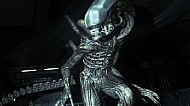
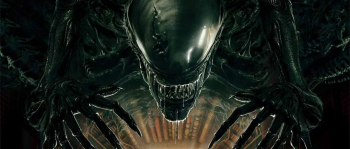
There’s something about the androids in Alien that lingers in your mind. They move quietly, almost unnoticed, and yet you sense the weight of their decisions. Unlike the terrifying Xenomorphs, their danger is subtle—almost psychological. They make us wonder: what does it mean to be alive? And more importantly, how much of “life” is choice, awareness, or intention?
Imagination as a Teacher
Stories do something amazing—they let us imagine without limits. Before engineers could design AI assistants or autonomous machines, writers imagined them. Fiction gives personality to algorithms, giving trust, curiosity, even fear to entities that don’t yet exist. When we empathize with an AI character, we train ourselves to see the world differently. Imagination becomes our teacher, far more compelling than any textbook.
Reflecting on Ourselves
AI stories also make us examine humanity. How do we define intelligence? Are emotions a necessary part of being “alive”? Where do we draw the line when creating minds of our own? These stories don’t answer the questions for us. Instead, they hand us a mirror. And sometimes, looking into it is uncomfortable—but necessary.
Learning Through Stories
Talking about these stories is part of the fun—and the lesson. Debating AI choices, imagining ourselves in their place, wondering how we’d act—this is where real understanding begins. It’s not about coding; it’s about curiosity, foresight, and empathy. Skills that are becoming essential in a world full of artificial intelligence.
Utopia, Dystopia, and Everything In Between
AI in fiction isn’t simple. Some stories imagine harmony, where humans and machines grow together. Others warn of disaster if intelligence outpaces ethics. And sometimes, the story doesn’t decide—it leaves you wondering, unsettled, thoughtful. How would we live alongside minds that think differently from ours? Could we ever truly understand them? Sci-fi gives us the chance to explore these “what ifs” safely, long before reality forces an answer.
Storytelling as a Bridge
At its best, science fiction is more than entertainment. It’s a bridge—a way to step into another mind, sometimes human, sometimes not, and come away seeing the world a little differently. Alien: Covenant and stories like it don’t just thrill us; they invite us to imagine, question, and feel. Reading or watching them, we are participants, not spectators. And that is the most human thing we can do: to imagine, to care, and to learn.