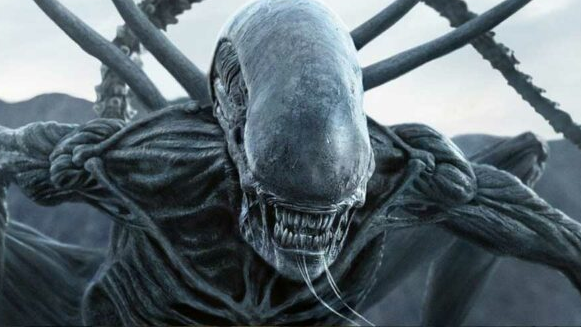
Does Reality Ruin the Fantasy?


On one hand, it would be fascinating to wander around and see all the technical things that made movies that burnt into our minds and imaginations.
On the other hand, seeing such things and a lot of behind the scenes things could lessen the wow factor or magic from the way you originally saw it.
What do you think? It is not limited to the Alien franchise.

7 Replies

Possibly if it is not done well enough. If a movie on the other hand has quality you can say that once that you have solved a mystery of let’s say the Xeno and how it was done you can also look back and look at the details that it was made of and then if you want to and are interested enough you can wonder how those details were made. To me it sort of depends on the interest of the viewer and how well those that made the creature, TV-show, or what ever did it both with ideas and the final thing that it became.
Put this into the context of the Alien franchise: Let’s say that the Xeno was made of the Engineers, then when that is done you can go back and look at the culture of the Engineers, for example. If that is done well you can see how the engineers came to be both as a culture and as life-forms while having some mystery in it.
It depends on how many layers there is to it and what you decide to answer of those, and how you do that.

It depends, sometimes when seeing 'behind the scenes' reels for movies/show can spoil the 'magic' when watching the movie/show again. Othertimes it has a 'fun fact' or 'friendly reminder' to it to me, or I just completely forgotten about it.
Though I gotta say, when rewatching the complete Alien anthology (in correct order) more seriously a couple of weeks ago, more focussing on the story; it did change 'Alien' for me. The Company/Ash knew, they where in it all along, sneaky sneaky...

I think its down to each person and how they react..
Myself, i find it interesting to see the Behind the Scenes.. the only Problem i usually have is you come across a Scrapped Idea a Prop that Looked Cool but was Cut/Never Used or Finished..
Then your like.... Darn-It i wish that was in the Movie!
A Excellent Example would be The Thing 2011
R.I.P Sox 01/01/2006 - 11/10/2017

Especially seeing behind-the-scene set-piece's does ruin the illusion of reality!

I have always loved & appreciated practical special effects. I'm also very interested in many of the artists & craftsmen who are involved in their creation, so finding out more about how they were achieved is a given.
Ridley Scott's Sci-fi movies are a prime example of this. Just look at the list of amazing artists, designers & technicians who have been involved with ALIEN, Blade Runner, PROMETHEUS & ALIEN: COVENANT. The Alien, the SJ & his derelict ship, the Hades landscape, Spinners, the Prometheus hangar & bridge, the Engineer head, the amazing contents of David's lab, to name but a few of their mind-blowing creations.
What I wouldn't give to have been able to visit any of those sets!
Another great example is John Carpenters The Thing. Rob Bottin was only 19 years old, yet Carpenter trusted him with what turned out to be truly awe inspiring, experimental creature designs. Some of the components Bottin used turned out to be highly flammable & toxic. Often a case of trial & error, what an unprecedented opportunity Bottin was given. A large part of the films success rests upon his incredible creature design.
Many technicians are problem solving, inventing & evolving as they work.
The in-camera photographic effects work for Blade Runner has to be one of the best examples to research. It makes the finished product appear even more incredible.
The art of practical effects were almost lost forever. Luckily, the film industry has now seen the benefits & sense of combining modern practical effects with the latest digital technology.
So for me, finding out more about the painstaking skill involved in bringing those effects to the screen is part of the magic.
"Let The Cosmic Incubation Begin" ~ H.R. Giger

It Kinda does however you can have reality and Fantasy together however they do cancel each other out but it also depends on the source material like Godzilla it is more of a fantasy franchise however when you look at Jurassic Park it is set in reality trying to be more scientific