dj6xOctober 08, 2013[i erroneously posted this in prometheus-1 thread - sorry - not trying to spam]
I think its right to start the analysis with the most basic premise – RS names this movie Prometheus. According to Websters:
“PROMETHEUS - In GREEK RELIGION, one of the TITANS and a god of fire. He was a master craftsman and a supreme trickster, and he was sometimes associated with the creation of humans. According to legend, Prometheus stole fire from the gods and gave it to humans. In vengeance, ZEUS created PANDORA, who married Prometheus's brother and set loose all the evils of the world. Another tale held that ZEUS had Prometheus chained to a mountain and sent an eagle to devour his liver, which regenerated every night so that he could suffer the same torment the next day.”
The movie is about creation, its possibilities/dangers, and our place as living creatures in the universe. RS use Prometheus’ fire as his metaphor for creation and destruction. Fire of all types; it can give life, and it can kill. Whether we’re speaking of a campfire that keeps you warm from the cold, but can rage out of control and destroy, or beneficial nuclear energy that can turn to nuclear apocalypse, fire in all of its forms is the ultimate double edged sword. Prometheus stole fire (the power to create and destroy) from the Gods (nature), and he was punished eternally.
In the movie Prometheus, we have a race of humanoids called the Engineers. They are an advanced race, evolved over many billions of years, whose curiosity, experimentation, and ingenuity has led them to the creation of a genetic seed that can be used, in combination with their own DNA, to populate primordial planets with Engineer DNA, and thus populate the galaxy/universe with their own kind. This creation/reproduction/survival instinct is very familiar to us – it is the very instinct all living beings require to survive in a competitive environment. It is a necessity of evolution. The instinct to reproduce should not be considered in any way “evil”. We see some of these Engineers (the Good Engineers) dressed as monks, in a benevolent looking ship, spreading their genetic material on a primordial planet (not at all necessarily earth).
Despite their good intentions though, the Good Engineers have in fact opened Pandora’s box, so to speak. Instead of reproducing naturally, the Good Engineers have committed a great hubris by trying to accelerate the reproductive/creation process – by creating the genetic seeding material that will allow them to quickly populate known space. This “fire” is a dangerous tool – and should never be let into the wrong hands (or maybe any hands at all!)
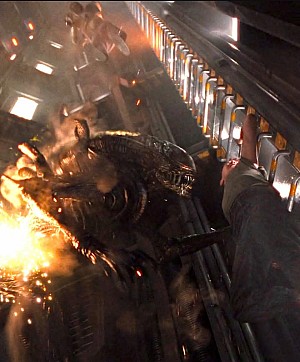
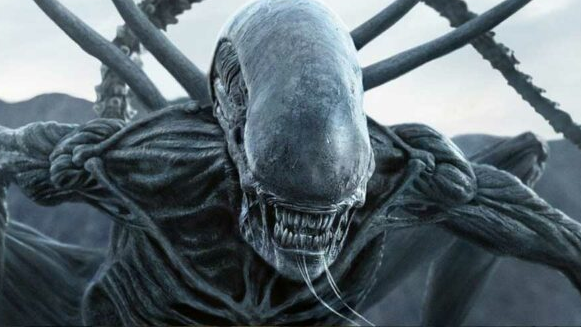
On the Engineers home world(s) (ironically name Paradise – probably more appropriately Paradise Lost) or a nearby competitive Engineer planet (we must imagine that the Engineers themselves had populated many solar systems, having easily depleted the resources of their original birthplace), a more militaristic/nefarious group of Engineers (the Bad Engineers) decides to experiment with the seed. Intentionally or not, they weaponise it – creating a DNA devouring/altering form of the seed that infects all living things it touches, turning them into pure killing machines, or hosts for those machines (all of the different incarnations of the Xenomorph). Effectively, where the Good Engineers have used the seed for life, the Bad Engineers have used it for death.
Again, fire can create or destroy.
Seeing the purity of organism, and its raw killing power, it becomes as a God to these Bad Engineers. They worship this new fire, this destructive power. Whereas the Good Engineers see the universe as fundamentally benevolent, and may believe in a benevolent God, the Bad Engineers worship this new destructive seed, a new terrifying God of Death (see Hades, Thanatos, or Erebus). A war between the Good Engineers and the Bad Engineers ensues, and Paradise is definitely lost as this genetic virus is let loose on the Good Engineers home world(s).
The Good Engineers flee, and the Bad Engineers follow.
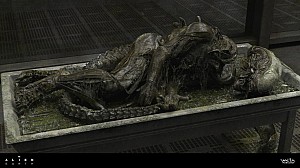
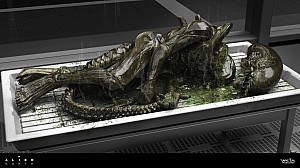
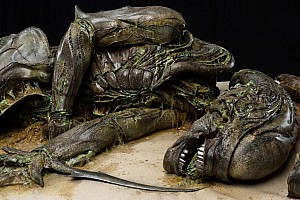
A race across the Galaxy (universe?) begins, with the Good Engineers trying to survive, and procreate through the use of their genetic material and the seed. The Bad Engineers seek out the Good Engineers and their worlds and trying to destroy each one before it can grow and flourish. The Engineers we meet in their battleship on LV-223 are clearly the Bad Engineers, undone by an accidental release of their own weapon upon themselves. We, as Humans on earth, are the genetic offspring of the Good Engineers, from millennia past. Our world would be, presumably, a target for extinction by the Bad Engineers.
Why are the Bad Engineers bad? Why would they want to destroy their own kind? Do I really need to point to the Billions of humans that we humans have destroyed through war, torture, murder, and genocide in the few years we have been on our own planet? It is the competitive instinct to survive, to kill or be killed, that has raised our species to a level of supreme dominance on this planet. That instinct is core to all animals. Why should the Engineers be any different? Neither vast amounts of conditioning nor hundreds of generations of selective breeding will ever entirely remove that killer instinct from a species. Quite simply, your life *requires* death of another. Without death there is no evolution, no life. In Huxley’s “Brave New World” or Zamyatin’s “We” this point is beautifully illustrated. In both cases, perfectly controlled societies were undone by the natural survival instinct. You can try and control the system, but it only takes one outlier, one man in a trillion to remember that he is an animal, to set fire to the whole mirage of utopia. The Bad Engineers were, and are, an inevitability. Similarly, evil humans were, are, and always will be a part of our species.
This, in my opinion, sums up the present and future story of RS’s Prometheus. The story is as old as the Greek Mythology it borrows its name from. The story illuminates a great truth – that only nature can create life in balance. When nature’s own offspring (part of nature itself, of course) try to upset that balance, the results are always a return to the mean. If RS wants to get moralistic, he could be saying much about our own mistaken desires to become God-like – to create in our own image – whether by artificial mechanical (robotic – see Battlestar Gallactica reboot, or David/Bishop in this series) or artificial genetic means. But maybe he’s saying nothing more than this
- play with fire and you’re going to bet burned.